


.avif)
The skull acts as a helmet for the brain, but even minor head injuries can cause hidden damage like intracranial bleeding, pressure build-up, or concussion.
What are symptoms of a concussion? They range from subtle memory or mood changes to clear warning signs needing emergency care. Recognizing all symptoms helps ensure timely treatment.
If your concussion was caused by another party’s negligence, contact The Brain Injury Law Center at (757) 244-7000 for a free consultation to discuss your potential legal options and rights.
What Is a Concussion? Definition and Description
According to the Centers for Disease Control (CDC), a concussion is a type of traumatic brain injury caused by a bump, blow, or jolt to the head, or by a hit to the body that causes the head and brain to move rapidly back and forth.
Concussions usually occur at 90 to 100 g-force, equal to hitting your skull against a wall at 20 mph. For context, airplane takeoff is about 1.25 g, and fighter pilots experience about 9 g. Most concussions deliver 95 g's, 95 times gravity's force.
Impact severity does not predict the outcome. Every brain reacts differently. When doctors say a concussion is "mild," it just means not life-threatening, but it can still greatly affect your life.
What Are Common Causes of Concussion?
Concussion injuries can be caused by:
- Falls due to fainting, tripping, or being bumped/shoved;
- Vehicular accidents involving cars, motorcycles, bikes, and skateboards;
- Sports injuries like football collisions, impact from a hockey stick/racket, or diving accidents;
- Violence such as fist fights or blunt object attacks; and
- High-speed jolts that cause the head to move rapidly back and forth, like sudden stopping and whiplash.
Even without an external impact to the head, high speeds may cause the brain to hit the inside of the skull. Cases of "shaken baby syndrome" and other forms of abusive head trauma to infants are examples of indirect impact brain injuries.
Concussion Signs and Symptoms: Mild to Severe
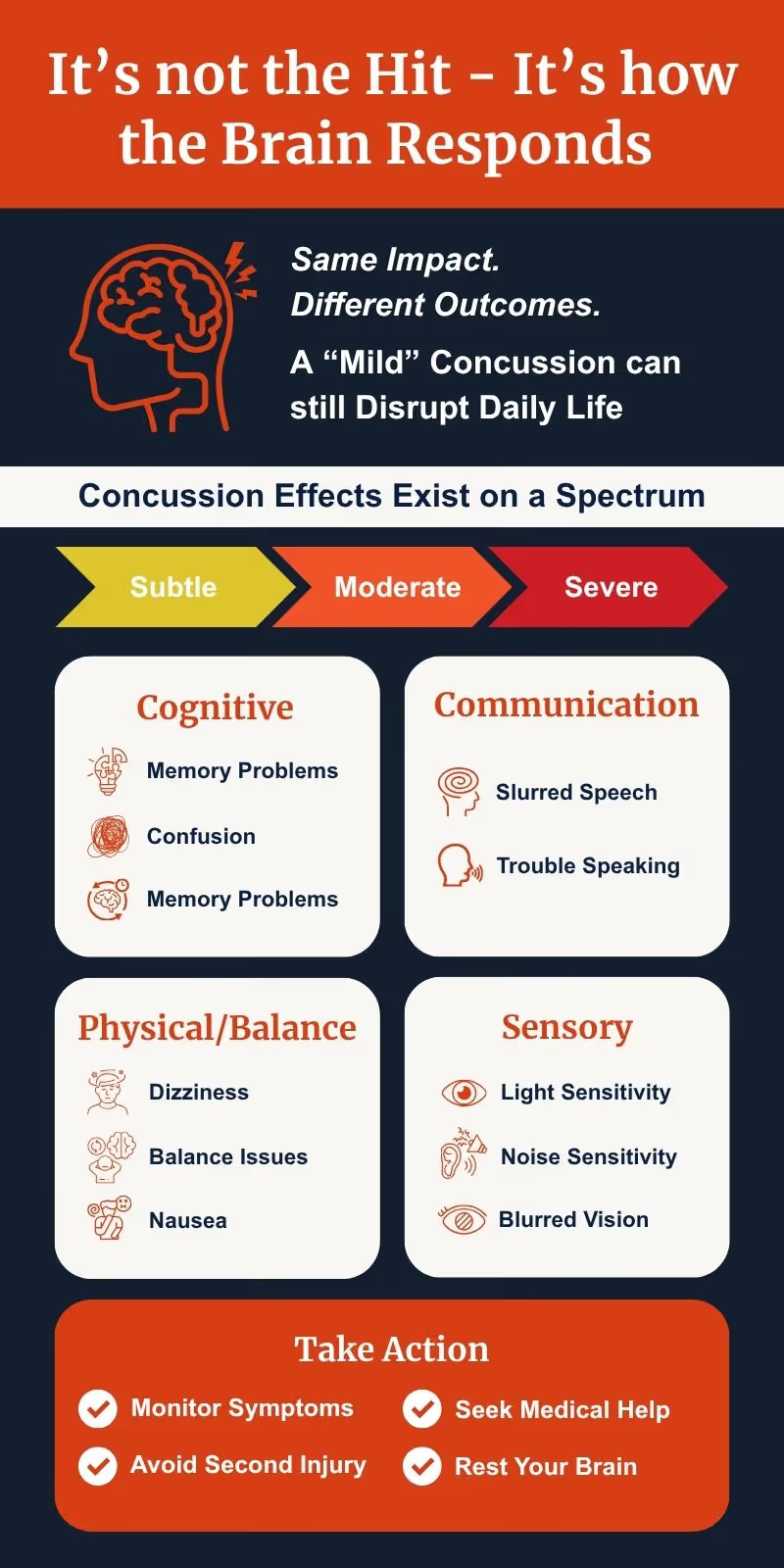
Many think a harder hit means worse brain injury, but that's a myth. Each brain is unique, so head injury outcomes differ. Impact force doesn't predict damage severity.
That is why it is important to treat any head trauma as potentially serious. While a doctor may describe a concussion as a "mild" brain injury, that may only mean that it's not life-threatening.
Mild Concussion Symptoms
Mild concussions can still change motor abilities, processing, and communication. Don't ignore them. Mild-to-severe concussion symptoms include:
- Slowed reactions to stimuli,
- Memory difficulties,
- Drowsiness or mental sluggishness,
- Slurred speech,
- Confusion,
- Dizziness,
- Headaches,
- Heightened sensitivity to noise or light,
- Blurred or double vision,
- Balance issues, and
- Nausea or vomiting.
Whether from concussion or not, these symptoms are critical indicators of brain injury. Seek immediate medical evaluation if they appear.
Severe Concussion Symptoms
More serious symptoms mean the brain is under major stress. Watch for:
- Repeated vomiting;
- Loss of consciousness, even briefly;
- Seizures or convulsions;
- Profound confusion or disorientation;
- One pupil larger than the other;
- Extreme drowsiness or inability to be woken;
- Weakness or numbness in the arms or legs; or
- Worsening headache that does not respond to rest.
Emergency Symptoms: When to Call 911 Immediately
Some symptoms after a head injury need urgent care. Don't wait for these to go away:
- Loss of consciousness lasting more than a few seconds,
- A headache that rapidly worsens after the initial injury,
- Repeated vomiting (more than twice),
- Seizures of any duration,
- Unequal pupil size or eyes that will not focus together,
- Sudden inability to recognize people or places,
- Slurred speech or garbled words that come on quickly,
- Weakness or numbness in limbs on one side of the body, or
- Clear fluid draining from the nose or ears (a sign of a skull fracture).
These symptoms can signal brain bleeding, skull fracture, or high intracranial pressure. Act fast. Call 911 or go to the ER.
The Danger of Delayed Care After Concussion Injuries
One danger of concussion injuries is that sometimes there are no symptoms. Unseen brain damage can cause people to delay or skip medical treatment. This may be fatal.
Concussion signs and symptoms can be delayed. They might not appear right after injury. That is why it is important to get medical help right away, even if there are no immediate signs. A doctor can help diagnose and advise on follow-up treatment.
Concussions and traumatic brain injuries (TBIs) are often not detectable through medical scans and X-rays. Diagnosis and recognition of a concussion often require observing a person's behavior, such as their speech or movements. Combined with the delay factor, this is why it's crucial to know the symptoms of a concussion.
For example, while medical experts say it is safe to sleep after a concussion, they specify that it's only advisable if someone else wakes the person up regularly to monitor their symptoms.
Any time there is a blow to the head or violent back-and-forth motion, a person and their family should be prepared for what could potentially be days and weeks of monitoring.
If you have questions about your legal rights after a concussion-causing injury, call The Brain Injury Law Center for a free, professional consultation at (757) 244-7000.
Concussion Symptoms in Children vs. Adults
Children and adults share many concussion symptoms, but the injury presents differently across age groups, and the stakes shift, too.
Children and Teens
Developing brains are more vulnerable to concussions and recover more slowly. In children, look for:
- Appearing dazed, glassy-eyed, or unusually clumsy;
- Crying more than normal without a clear reason;
- Changes in sleep patterns;
- Loss of recently learned skills in very young children;
- Unusual irritability or emotional outbursts; or
- Headache reports that escalate over several hours.
Research in JAMA Pediatrics found that about 25% of children with a concussion still show symptoms 28 days later. The CDC reports emergency departments treat about 283,000 children annually for sports- and recreation-related concussions.
Student athletes face particular pressure to return to play quickly. Second-impact syndrome — a second concussion before the first has fully healed — carries a mortality rate that can exceed 50%.
Adults
Adults often recover faster than children, but age, concussion history, and health affect outcomes. Adults may notice:
- Cognitive fog that makes professional responsibilities harder to manage;
- Sleep disruption, including insomnia or hypersomnia;
- Emotional volatility that feels disproportionate to events;
- Post-concussion headaches that persist for weeks; or
- Dizziness or balance problems during physical activity.
Adults over 65 face an elevated risk of falls, the leading cause of traumatic brain injuries in this age group. Falls account for nearly half of all TBI-related hospitalizations nationally.
How Long Do Concussion Symptoms Last?
Most mild concussion symptoms clear up within 7 to 14 days, though children's recovery takes longer. Sometimes, neurological pathways remain damaged despite the brain's resilience.
When symptoms of a concussion persist beyond three months, the condition is classified as post-concussion syndrome (PCS). PCS affects an estimated 10% to 20% of concussion patients and can involve chronic headaches, ongoing cognitive difficulties, anxiety, depression, and persistent fatigue.
Prior concussions raise the risk of a longer recovery. Athletes with three or more have five times the risk of post-concussion syndrome versus first-timers.
People often wonder how long concussion symptoms last. While it's possible to adapt new connections around damaged areas of a brain, that sort of recovery takes work, treatment, and time — in many instances, a lifetime. Recovery often involves:
- Cognitive rest during the acute phase (limiting screens, reading, and mental exertion);
- Graduated return to physical activity under medical supervision;
- Cognitive-behavioral therapy for mood-related symptoms;
- Vestibular therapy for persistent dizziness and balance problems; and
- Neuropsychological evaluation to document and treat cognitive deficits.
Concussion Risks and Outcomes: What the Data Shows
- The CDC estimates 1.6 to 3.8 million U.S. sports- and recreation-related concussions yearly, though many go unreported.
- An estimated 50% of concussions go undiagnosed.
- Roughly 10% of all contact sport athletes sustain a concussion in any given season.
- The risk of depression following a traumatic brain injury is 3 to 5 times higher than in the general population.
- Men are more likely to get concussions, but women usually experience more severe symptoms and longer recovery.
How Can a Brain Injury Settlement Help Concussion Patients?
A legal settlement for those who've suffered a concussion could cover:
- Medical bills and the costs of cognitive-behavioral therapy;
- Loss of income and job-related benefits like health insurance coverage;
- Pain and suffering, such as physical and/or emotional anguish, including damaging psychological trauma like grief, anger, and stress;
- Punitive or "punishment" damages charged against the wrongdoers behind the cause of injury (like a drunk driver, or dangerous conditions in a workplace or retail store), fees that may then be awarded to you; and
- Wrongful death support for those who lose a loved one due to a brain injury.
Resources for Concussion and TBI Victims
Recovery from a concussion extends beyond the doctor's office. These organizations provide research, support programs, and guidance for patients and families navigating life after brain injury.
- CDC Traumatic Brain Injury & Concussion: Federal data, prevention tools, and clinical guidance on TBI and concussion.
- Brain Injury Association of America: The nation's oldest and largest brain injury advocacy organization, with a helpline and state chapter directory.
- Virginia Brain Injury Alliance: Virginia-specific resources, peer support groups, and survivor services.
- National Concussion Foundation: Education and community resources focused specifically on concussion awareness and post-concussion syndrome.
Contact The Brain Injury Law Center
The human mind is still the most impressive computer known to humankind. It is unmatched when you consider the number of processes running at all times to keep your lungs breathing and heart beating, plus the higher cognitive functions of dexterity, philosophy, and invention.
A blow to the brain that causes a concussion can interrupt all of that and possibly lead to death. If you have questions about your legal rights and resources after a concussive injury, call The Brain Injury Law Center today at (757) 244-7000, or contact us online.
Our firm's founder, Stephen M. Smith, is a graduate of Marquette University's Neuroanatomical Dissection of the Human Brain and Spinal Cord program and brings extensive knowledge and experience in brain injury cases. We have cultivated a fierce dedication to supporting our clients in both body and mind and to ensuring that their families stay strong after devastating injury.
Reach out to The Brain Injury Law Center as soon as possible — we're here to help.


