




.avif)
Most people know what it feels like to be tired. But the exhaustion that follows a brain injury is something else entirely. It does not go away after a good night's sleep. It shows up in the middle of a conversation, halfway through a grocery run, or after twenty minutes of watching television. And it can make everything else harder: work, relationships, recovery.
This kind of exhaustion has a name: neurological fatigue.
It is one of the most common effects of a traumatic brain injury, and one of the most difficult to explain to the people around you. If you or someone you love is struggling with this after an accident, understanding what is happening and why is the first step toward getting the help you deserve.
If your brain injury was caused by someone else's negligence, the Brain Injury Law Center can help. Call (757) 244-7000 for a free case review.
What Is Neurological Fatigue?
Neurological fatigue, sometimes called neurofatigue, is not the kind of tired that a nap fixes. It is a state of mental and physical exhaustion that happens when a damaged brain is forced to work harder than it should have to just to get through the day.
After a brain injury, the brain's circuitry is disrupted. Things that used to happen automatically, like following a conversation, reading an email, or walking through a store, now require significantly more effort. The brain has to reroute signals, compensate for damaged pathways, and use far more energy than it did before the injury. That extra demand is what causes neurological fatigue.
You may have heard it called brain fog, and while that phrase captures something real, it also undersells what people with neurological fatigue are actually going through. Brain fog has become a catch-all term that can make a serious condition sound minor or trendy. Neurological fatigue is neither.
There are two types:
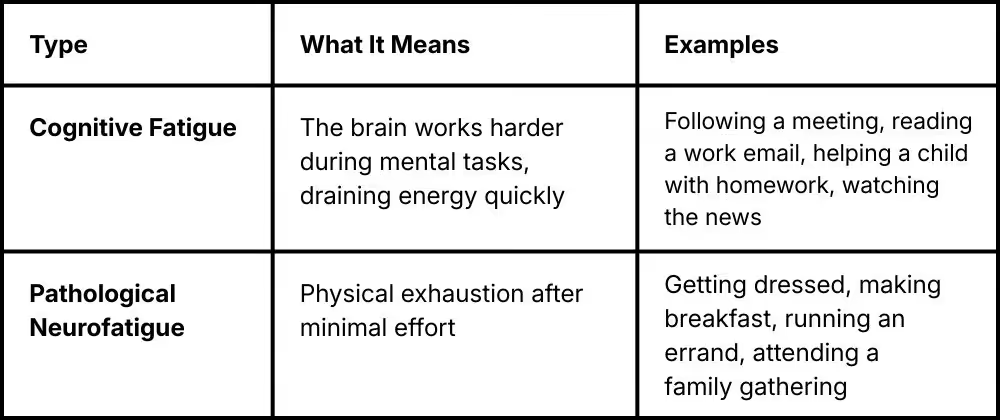
In many cases, both types are present simultaneously. The mental effort of getting through a few hours of work can leave someone so physically drained by the end of the day that they are too tired to cook, drive, or carry on a conversation. For many brain injury survivors, this is not an occasional bad day. It is every day.
Neurological Fatigue Symptoms After a Brain Injury
Regular tiredness makes sense. You stayed up too late, worked a long shift, or chased after your kids all day. You sleep, and you feel better. Neurological fatigue does not work that way. Sleep helps, but it does not reset anything. The next morning, the exhaustion is still there.
Some of the most common symptoms include:
- Rapidly feeling drained after mental activity,
- Feeling more fatigued as the day goes on,
- Difficulty concentrating or paying attention,
- Sleep disruptions,
- Mood swings or irritability,
- Difficulty tolerating stress,
- Headaches,
- Dizziness, or
- Increased sensitivity to light or noise.
Take someone who was rear-ended in a car accident on her way to work. Six weeks after the crash, she is back at her desk but cannot make it past noon without feeling completely wiped out. By 2pm, the overhead lights are unbearable, her patience is gone, and she cannot follow a conversation without losing her train of thought. She went to bed at 9pm the night before. Nothing about this feels like ordinary tiredness, but she cannot explain it in a way that makes sense to the people around her.
The invisible nature of neurological fatigue is part of what makes it so hard to fight. There is no cast, no bruise, nothing to point to. And because there is nothing visible, it is easy for others to minimize, including the insurance adjuster from the at-fault party, who may call to ask how you are feeling.
Those calls are not casual check-ins. Insurance adjusters are trained to ask questions in ways that suggest your exhaustion is just stress, poor sleep habits, or something unrelated to the accident. A friendly voice asking, "Are you getting enough rest?" is not an expression of concern. It is an attempt to build a case that your fatigue existed before the accident or has nothing to do with it. Log every call you receive, including the date, what was asked, and what you said.
Keeping a detailed record protects you. Write down your symptoms every day. Include when the fatigue hits, how long it lasts, what triggered it, and how it affected what you were able to do. Your doctors need this information to understand what you are going through, and if your case ever moves forward, it will become some of the most important evidence you have.
Why Does a Brain Injury Cause Neurological Fatigue?
Think of your brain as a smartphone with a cracked screen and a damaged battery. Before the injury, it ran dozens of applications at once without a second thought. After the injury, even the simplest tasks drain the battery faster than it can recharge.
When a brain injury occurs, the brain's internal wiring is disrupted. Neurons that once communicated quickly and efficiently now have to find new routes to send signals. That rerouting takes energy—far more energy than a healthy brain would need for the same task. The result is a brain that is working at full capacity just to do things that used to require no effort at all.
This is why neurological fatigue is not about being out of shape or unmotivated. It is a direct consequence of the injury itself. The brain is doing its best to compensate for damage it sustained, and that compensation comes at a cost.
Neurological fatigue is reported by as many as 70% of traumatic brain injury patients. It is common in the months following a concussion or TBI and can persist for years, long after other symptoms have resolved. For many survivors, it is the symptom that lingers the longest and has the greatest impact on their ability to return to work, maintain relationships, and live the life they had before the accident.
For nearly five decades, the Brain Injury Law Center has worked exclusively with brain injury survivors and their families. We understand what neurological fatigue is, how it affects every part of a person's life, and what it takes to make sure that impact is not minimized or ignored.
If your injury was caused by someone else's negligence, act now. Call (757) 244-7000 or contact us online to speak directly with a brain injury lawyer and protect your rights today.
Can Neurological Fatigue After a Brain Injury Be Treated?
Getting a diagnosis for neurological fatigue can be frustrating. There is no single test that confirms it. A doctor cannot order a scan and point to it on a screen. Like so many effects of a brain injury, it is largely invisible, which means it is often dismissed or minimized by medical providers who are not familiar with it.
If you are being told that your exhaustion is just part of getting older, a symptom of anxiety, or something that will resolve on its own, push back. Ask for a referral to a neurologist or a specialist in brain injury rehabilitation. You deserve an evaluation from someone who understands what a brain injury actually does to the body.
Treatment for neurological fatigue typically involves learning to manage energy rather than push through it. Some of the most common approaches include:
- Pacing. Breaking tasks into smaller segments with planned rest periods rather than trying to power through an entire activity at once.
- Cognitive rehabilitation. Working with a specialist to rebuild cognitive stamina and develop strategies for managing mental fatigue.
- Sleep therapy. Addressing sleep disruptions that make neurological fatigue worse.
- Medication. In some cases, medication may be prescribed to help manage fatigue, though this varies depending on the individual and the severity of the injury.
- Lifestyle adjustments. Modifying daily routines to reduce unnecessary cognitive load during the recovery period.
Progress can be slow, and what works for one person may not work for another. The most important thing is to keep showing up to appointments, be honest with your providers about what is and is not working, and continue documenting everything.
How a Brain Injury Lawyer Can Help With a Neurological Fatigue Claim
Neurological fatigue is one of the most misunderstood effects of a brain injury, and insurance companies know that. When a symptom cannot be seen on a scan, it becomes easy to argue that it is exaggerated, pre-existing, or unrelated to the accident. That is exactly the kind of argument an experienced brain injury lawyer is prepared to counter.
A brain injury lawyer understands what neurological fatigue actually is, how it is documented, and what it takes to show the full impact it has had on your life. That includes:
- The work you have missed and the income you have lost,
- The activities and routines you can no longer manage,
- The relationships that have been strained or changed, and
- The treatment you have needed and will continue to need.
Beyond building your case, a lawyer handles the insurance company directly. Calls designed to get you to downplay your symptoms. Settlement offers that do not come close to reflecting what you have been through. Tactics meant to make you feel like your injury is less serious than it truly is. A lawyer puts a stop to all of that.
What you went through was life-altering. A brain injury that disrupts your ability to work, be present with your family, or get through a basic day deserves to be fully recognized.
Compensation for medical expenses, lost income, and the ongoing impact on your quality of life is something you may be entitled to, and a brain injury attorney can help you understand exactly what that looks like for your situation.
"The Brain Injury Law Center is the only law firm in the United States dedicated exclusively in representing brain injury victims, survivors and their families. I have dedicated both my personal and professional life to helping brain injury survivors and their families and other victims of catastrophic events."
— Stephen M. Smith, Founder │Brain Injury Law Center
Frequently Asked Questions About Neurological Fatigue After a Brain Injury
Can Neurological Fatigue Be Permanent After a Brain Injury?
For some people, yes. Research shows that neurological fatigue can persist long after other symptoms of a brain injury have resolved. In cases involving significant damage to the brain's circuitry, fatigue may become a chronic condition that requires ongoing management rather than fully resolving.
That does not mean nothing can be done. Many people see improvement with the right treatment and support, but it is important to take the symptoms seriously from the start rather than waiting to see if they resolve on their own.
How Long Does Neurological Fatigue Last After a Brain Injury?
There is no single answer. Some people experience neurological fatigue for a few months following a concussion or TBI, while others deal with it for years.
Research suggests that fatigue levels can remain elevated well beyond the six-month mark, particularly in people who did not receive early treatment or who were dealing with other compounding factors like depression, sleep disruption, or ongoing stress. The severity of the original injury does not always predict how long fatigue will last.
Is Neurological Fatigue Covered by Insurance After an Accident?
It should be, but getting insurance companies to recognize neurological fatigue as a compensable injury is often a fight. Because it cannot be seen on a standard imaging scan, adjusters frequently argue that it is unrelated to the accident, pre-existing, or not serious enough to warrant compensation.
This is one of the reasons having a brain injury lawyer matters. An attorney who understands how neurological fatigue is documented and how it affects daily life can build a case that reflects the true impact of the injury.
Contact the Brain Injury Law Center Today
Neurological fatigue does not show up on a scan. It does not fit neatly into an insurance company's definition of a serious injury. But for the people living with it every day, it changes everything.
The Brain Injury Law Center has spent nearly five decades working exclusively with brain injury survivors and their families. Our team has recovered more than $1 billion for clients whose injuries were questioned, minimized, or disputed. Stephen M. Smith, the firm’s founder, secured the largest mild traumatic brain injury verdict in the world and the largest personal injury verdict in Virginia history.
If your injury was caused by someone else's negligence, you deserve a team that understands what you are going through and knows how to fight for you. Call (757) 244-7000 or reach out to us online. The consultation is free, and there is no obligation.


